
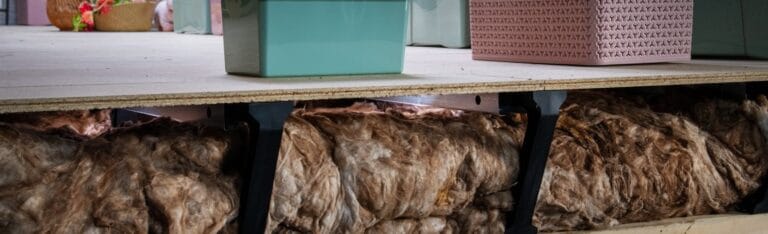
Boarding a loft is one of the most common home improvements in the UK but it’s also one of the easiest ways to accidentally undo the benefits of good insulation.
Many homeowners want extra storage space but worry (rightly) about crushing insulation, increasing heat loss, and pushing energy bills back up. The good news is that you can board over loft insulation safely as long as it’s done the right way.
This guide explains why squashed insulation causes problems, what the current UK insulation recommendations are, and how different loft boarding options compare when it comes to warmth, cost, and long-term efficiency.
Why Squashed Insulation Is a Problem
Loft insulation mainly works by trapping pockets of air. These air gaps slow down heat movement, keeping warm air inside your home during winter and helping prevent overheating in summer.
When insulation is compressed, those air pockets disappear.
That means:
- Heat escapes more easily through the roof
- Your boiler or heat pump works harder to maintain temperature
- Energy bills increase
- Condensation risk can rise due to moist air cooling as it rises and not having the space to ventilate away.
Unfortunately, traditional loft boarding methods often compress insulation without homeowners realising it, especially when boards are fixed directly to ceiling joists.
The result is a loft that looks tidy but performs worse than before.
UK Loft Insulation Depth Recommendations (What You Need to Know)
According to current UK guidance, including recommendations aligned with building standards and energy-efficiency schemes, most homes should have at least 270mm of loft insulation.
Many properties fall short of this – especially older homes – and even those that meet the recommended depth can lose performance if insulation is disturbed or crushed during boarding.
Key points to keep in mind:
- Insulation depth matters just as much as insulation type
- Compression reduces effectiveness dramatically (usually by at least 50%)
- Adding boards on top of insulation without a raised system usually causes long-term heat loss
This is why loft boarding and insulation should never be treated as separate decisions.
You can explore suitable insulation options alongside storage solutions in our dedicated Loft Insulation range.
Can You Board Over Loft Insulation at All?
Yes but not by fixing boards directly onto joists.
Ceiling joists are typically only 100mm deep, or less, while modern insulation recommendations are nearly three times that. If boards are installed straight onto joists, the insulation underneath becomes compressed.
This leads to:
- Reduced thermal performance
- Cold spots in rooms below
- Increased heating costs over time
- Crushed insulation that often needs replacing
The solution isn’t thinner insulation, it’s raising the storage floor above it.
Raised Loft Boarding vs Other Options
There are several ways homeowners attempt to create loft storage, but they don’t all deliver the same results.
Direct-to-Joist Boarding (Traditional DIY Method)
This is the most common mistake.
Pros
- Cheap upfront
- Simple to install
Cons
- Compresses insulation
- Reduces energy efficiency
- Can cause ceiling deflection over time
- Leads to higher heating bills
Plastic Loft Legs & Basic Spacer Systems
These systems lift boards slightly above joists, allowing some insulation to sit underneath.
Pros
- Better than boarding directly onto joists
- Relatively low cost
Cons
- Limited load distribution
- Time-consuming to install
- Can feel unstable underfoot
- Not designed as a fully engineered floor system
Raised Loft Boarding Systems (Engineered Solutions)
Modern raised loft boarding systems are specifically designed to solve both storage and insulation problems at the same time.
Systems such as LoftZone StoreFloor:
- Raise the storage platform above insulation
- Allow insulation to remain at full recommended depth
- Spread load across multiple joists
- Maintain airflow and ventilation
- Create a strong, stable surface for storage and access
This approach protects your home’s thermal performance while giving you practical, usable storage space.
Energy Efficiency, Cost, and Long-Term Value
Crushing insulation may save money on installation day but it often costs more in the long run.
Poorly boarded lofts can:
- Increase annual heating bills
- Undermine the value of insulation upgrades
- Require costly corrections later
- Contribute to damp and condensation issues
A raised boarding system costs more upfront but helps:
- Preserve insulation efficiency
- Reduce heat loss
- Protect against future remedial work
- Deliver long-term savings on energy bills
For homeowners focused on energy efficiency, properly insulating your loft and protecting the insulation there, is one of the few home upgrades that pays back quickly.
Final Thoughts: Storage Without Compromise
Boarding over loft insulation doesn’t have to mean sacrificing warmth or efficiency.
The key is understanding that insulation needs space to work properly and any storage solution must respect that. Raised loft boarding systems allow homeowners to add valuable storage without undoing the benefits of proper insulation.
If you’re planning to board your loft, focus on solutions that protect insulation depth, spread load safely, and support long-term energy efficiency. Whether tackling it yourself or working with the correct installer, your loft can stay warm, accessible, and cost-effective for years to come.