
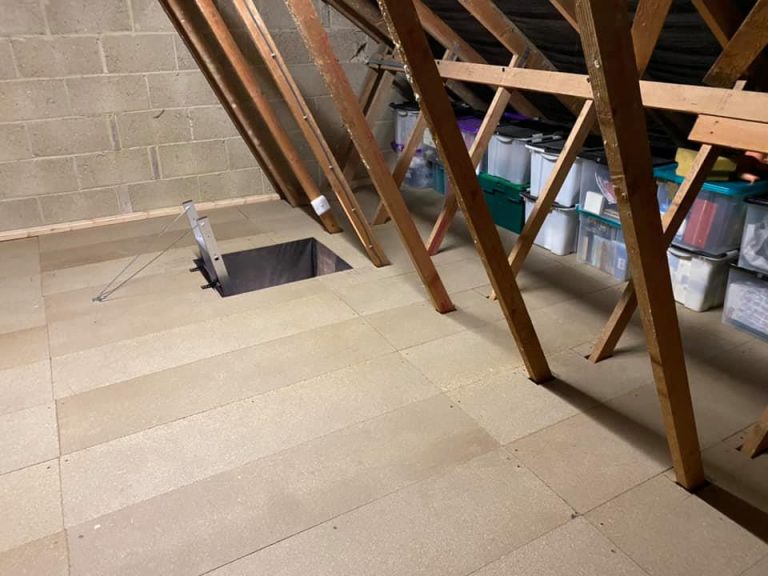
Boarding a loft is one of the most practical ways to increase storage space in UK homes, but many homeowners are unsure about the legal requirements. Do you need building regulations approval? Will insurance cover your loft if it’s boarded? Understanding the rules before you start is essential to avoid fines, voided insurance, or costly repairs.
In this guide, we’ll explain the difference between loft boarding and loft conversions, when building control approval is needed, and what UK homeowners should consider for safety and compliance.
Loft Boarding vs Loft Conversion: Understanding the Legal Distinction
One of the biggest misunderstandings is confusing loft boarding with a full loft conversion. The law treats these two very differently:
Loft Boarding (Storage Use)
- Simply involves installing raised boards or platforms to store items like boxes, decorations, or luggage.
- Does not create habitable space for sleeping, working, or living.
- Usually does not require planning permission or building regulations approval, provided it does not involve structural changes.
Loft Conversion (Habitable Space)
- Converting your loft into a bedroom, office, or playroom creates a space where people will regularly occupy.
- Requires building regulations approval, and sometimes planning permission, too (unless it comes under the ‘Permitted Development’ rules), and
- Must comply with structural, fire safety, insulation, and ventilation standards.
For more on the difference, see LoftZone’s guide on loft conversions vs storage.
When Planning Permission Is Not Required
Almost all loft boarding projects are automatically allowed without needing to seek any permissions. You can board your loft without planning permission and without getting a building control inspector in if:
- No structural changes are made – You’re installing a raised platform over existing joists without altering the roof structure
- The space remains for storage only – No sleeping, working, or living in the loft
- You’re not in a listed building, where the regulations may forbid loft boarding.
Even so, there are best practices to follow:
- Maintain proper loft ventilation to prevent condensation and damp. Learn more in our article Does Loft Boarding Cause Condensation or Damp?.
- Avoid compressing insulation; raised loft systems like StoreFloor preserve thermal performance and airflow.
- Use materials rated for the storage load you intend to keep.
- Access is safe – Use a loft ladder (not a step-ladder) and a well-fitted, insulated, hatch.
Insurance Considerations
While building regulations may not apply to storage-only loft boarding, insurance policies can be more strict. Some home insurance policies require that any loft work:
- Does not compromise the structure – Overloading joists or creating unsafe platforms can void insurance.
- Complies with fire safety standards – Adding insulation or boards near electrical wiring must not increase fire risk.
- Maintains ventilation – Poor airflow causing condensation or damp could lead to claims being rejected.
Conclusion: Board Your Loft Safely and Legally
Yes, you can board a loft in the UK without building regulations if it’s strictly for storage and no structural changes are made. Using a raised loft boarding system ensures that your insulation and joists are protected, airflow is maintained, and your storage is safe and durable.
If you’re unsure about your loft’s suitability, contacting a specialist or licensed installer is the safest route. By doing so, you can unlock valuable storage space while staying fully compliant.