Every changeover season, you face the same problem. Winter coats take over the hallway. Summer dresses go missing at the back of a wardrobe. Your loft is the obvious answer, but only if you store your clothes properly.
Get it right and you free up space in every room of your home. Get it wrong and you damage your insulation, invite dampness, and pull out moth-eaten jumpers next winter.
This guide shows you how to do it properly.
Why your loft is the right place for seasonal clothes
You only need winter coats for a few months a year. The same goes for summer clothes. Storing off-season items in the loft:
- Frees up wardrobe and drawer space downstairs
- Keeps clothes you’re not using out of the way
- Makes your living space feel bigger
The loft is built for this kind of storage. Your everyday living space isn’t. If your loft isn’t set up for it yet, see our FAQs for answers on getting started, or find an installer near you.
Protect your insulation first
Before you carry a single box up there, check what’s under your feet.
Most lofts have insulation laid between or over the joists. If you place boxes directly on top, you squash it flat. Squashed insulation loses its ability to trap air, and that air gap is what keeps your heat in. Squash it and you could lose up to half of its performance, so you pay more to heat your home for the rest of the year.
This is the one mistake that costs you the most. A raised loft boarding system, like LoftZone StoreFloor, sits above your insulation instead of squashing it. You get proper storage and you keep your insulation working at full depth. If your loft is on the smaller side, there’s a StoreFloor Compact option built for tighter spaces.
If you’re boarding a loft for the first time, our install guide walks through the process step by step, and there’s a compact version for smaller lofts too.
Choose the right storage, not just any box
Cardboard boxes seem like the easy option. They aren’t the right one for a loft.
Lofts go through big temperature swings and can pick up moisture, especially near the eaves. Cardboard soaks up that moisture, and damp cardboard means damp clothes.
Use clear, sealed plastic storage boxes instead. Here’s why they work better:
- They keep moisture out
- You can see what’s inside without opening every box
- They stack safely without crushing the contents
- They keep moths and other pests away from natural fibres
Label every box on the side, not the lid. You’ll thank yourself when boxes are stacked three high.
How to pack clothes for the season
A few habits make the packing itself worthwhile.
Wash everything first. Sweat, food marks and other residue attract moths. Clean clothes store far better than clothes packed in a hurry.
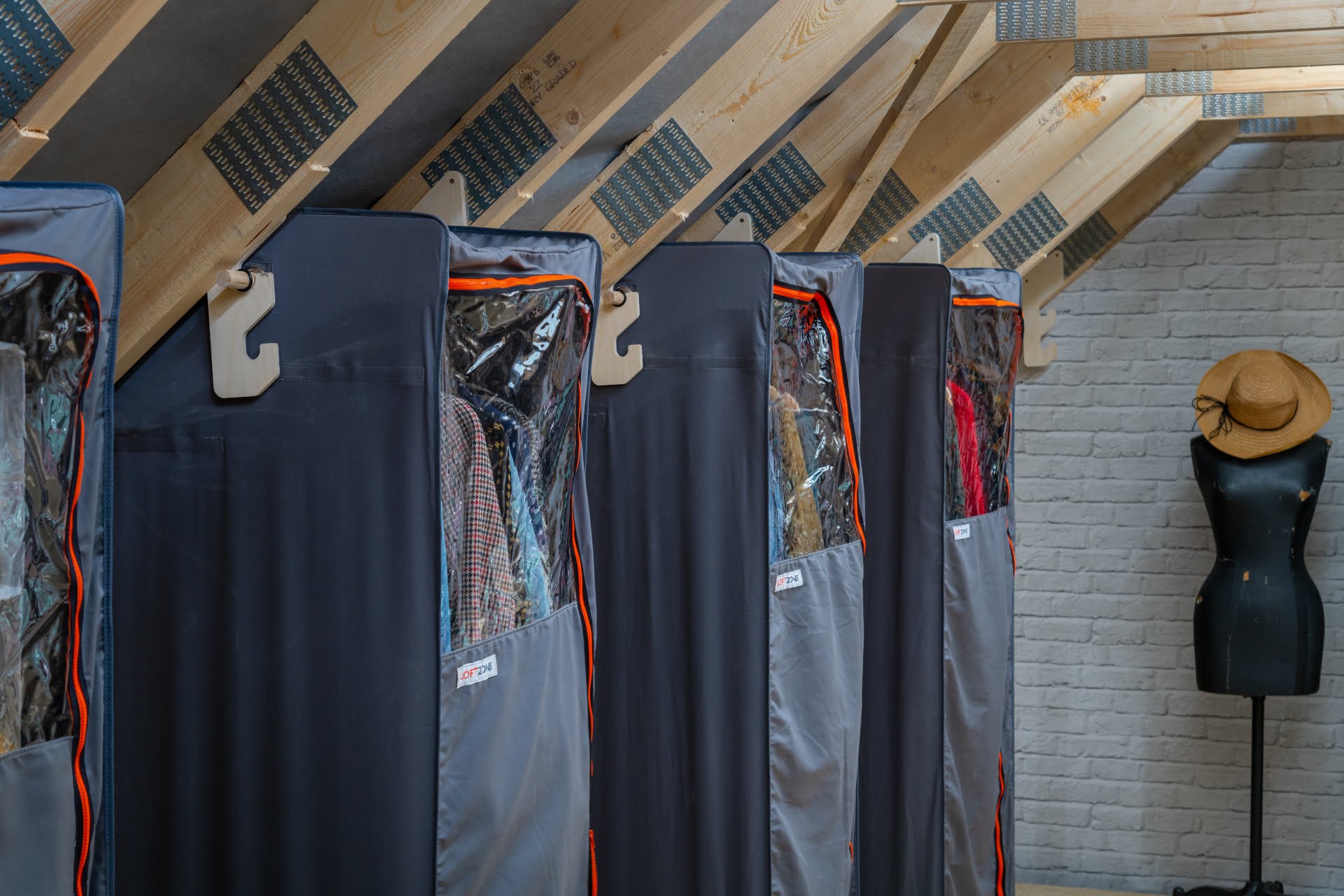
Use breathable garment bags for structured items. Coats, suits and blazers hold their shape better hanging or laid flat in a breathable bag, rather than folded tight in a box.
Add moth deterrents. Cedar blocks or lavender bags work well and don’t leave the chemical smell that mothballs do.
Don’t overpack the boxes. Clothes need a little room to breathe. A box crammed to the lid also gets heavier and harder to lift safely.
Keep fabric off bare joists or exposed insulation. Always store on a proper boarded surface, never directly on ceiling joists or loose insulation. See our full range of loft boards if you need to extend your existing boarded area.
Time your changeover well
Aim to swap your wardrobe over in spring and autumn, before the weather actually turns. That way you’re not digging through loft boxes on the first cold morning of the year.
A simple rule: swap when you’ve worn the same three or four items from the “wrong” season for a week straight. That’s your sign the season has properly turned.
Make next year’s changeover easier
The first changeover takes the most effort. After that, a bit of organisation saves you time every year.
- Store boxes by season, not by item type, so winter and summer stay separate
- Keep a printed or digital list of what’s in each box
- Position summer boxes nearest the loft hatch in winter, and winter boxes nearest the hatch in summer
- Leave a clear walkway across your boarded loft so you’re not climbing over boxes to reach the ones at the back
- If you’re still using a step ladder to get up there, our loft ladders range makes every trip easier
Common mistakes to avoid
- Storing clothes directly on insulation. This squashes it and increases your heat loss.
- Using cardboard boxes long term. They absorb moisture and invite pests.
- Packing clothes away dirty. Stains and odours attract moths.
- Overloading unboarded joists. Loft joists aren’t built to take weight across their full span. Always check what your loft can safely hold before you store anything heavy.
- Forgetting ventilation. A loft needs airflow. Don’t block vents or eaves gaps with boxes.
Get your loft ready before you start
If your loft isn’t boarded yet, sort that first. A raised boarding system gives you a stable, dry surface above your insulation, so your seasonal clothes stay protected and your heating bills stay down.
Find an installer near you, browse the LoftZone shop to get started before your next changeover, or get in touch if you’re not sure which option suits your loft.